 VapeWholesaleHub
Aspire Breeze Working With a Local Compliance Partner — the Middle East
Buying aspire breeze wholesale is a logistics problem disguised as a product problem. The unit is small, the margin depends on freight density, and the failure mode shows up weeks after delivery. The notes below come from real orders we have shipped.
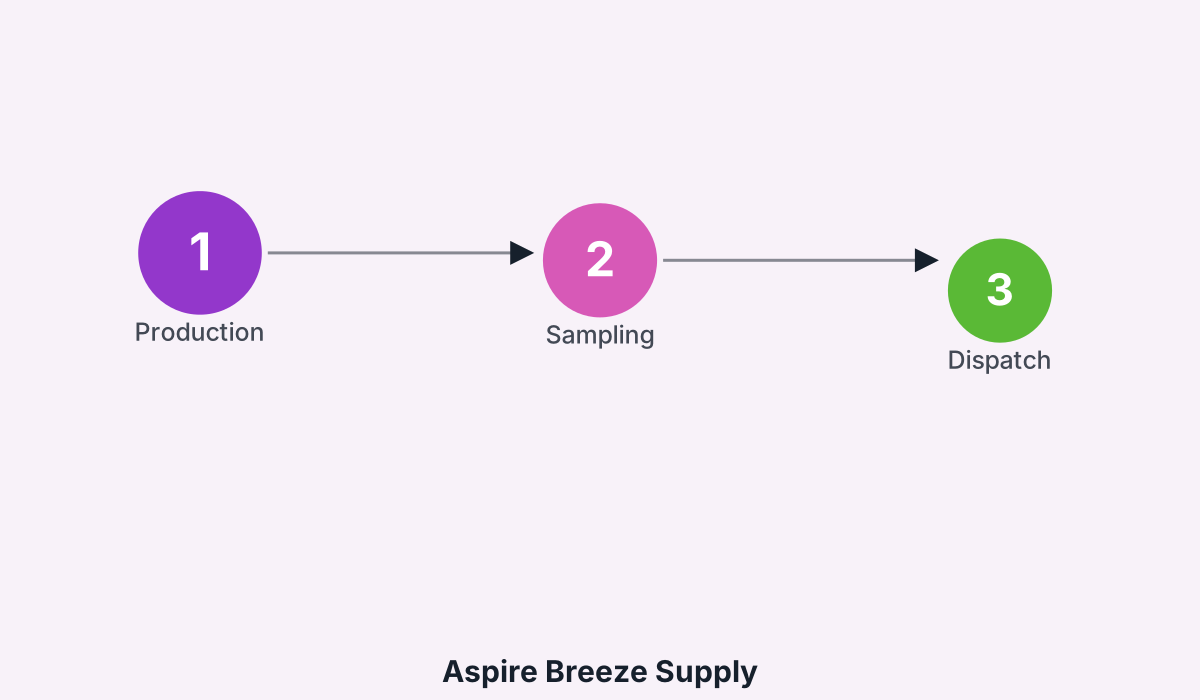
Market Signals
Retailers report that aspire breeze customers are asking more specific questions than they did two years ago. That favours ranges with clear, simple information over ranges with clever marketing.
Assortment rationalisation is the quiet trend in this category. Shops that cut their aspire breeze range from twelve lines to five well chosen ones often report higher total sales, not lower.
Where Aspire Breeze Sits in the Range
One useful exercise: list every aspire breeze line you stock and mark the last date each one sold at full price. Anything without a recent full price sale is taking space from something that would use it better.
Range decisions for aspire breeze should start from shelf space, not from a supplier catalogue. Count the facings you actually have, then decide how many of them this line deserves against what it currently earns.
The Specification That Matters
Ask any factory for the same aspire breeze sample twice, three months apart. If the second sample drifts, the production line is running without statistical control and your reviews will drift with it. Consistency over time is a more useful signal than a single good sample.
When we write a aspire breeze specification with a distributor, we fix four things first: the resistance band, the liquid capacity tolerance, the puff count methodology and the packaging master carton. Everything else can flex without changing the customer experience.
| Product category | Pod system |
|---|---|
| Resistance band | 1.0 - 1.2 ohm |
| Capacity tolerance | +/- 3% |
| Puff count method | Machine cycle 3s on / 27s off |
| Master carton | 120 units |
| Carton weight | 3.9 kg |
| Shelf life | 18 months |
| Storage | 15-25 C, dry, away from direct light |
Freight, Customs and Timing
Air freight makes sense for a first aspire breeze order when you need to test demand quickly, but almost every steady programme moves to sea freight once volumes stabilise. Planning that switch early avoids a painful margin squeeze later.
Modelling a Healthy Margin
When you model aspire breeze pricing, build in a realistic shrink figure. Even a well run line loses a small percentage to damage, expiry and sampling. Pretending that number is zero is how a healthy looking margin turns negative.
Build aspire breeze price tiers around order sizes your customers actually place. Tiers that only make sense on a spreadsheet get ignored, and you end up discounting ad hoc instead.
Indicative reference points for planning purposes: entry tier from USD 0.97 per unit at 2000 units, mid tier at USD 1.73, and volume tier at USD 1.40 for full container quantities. These figures move with specification, packaging and freight, so treat them as a shape rather than a quote.
Quality Control in Practice
Keep a photo record of every aspire breeze approval sample. Written descriptions age badly; a dated photograph next to a delivered unit settles most arguments in seconds.
- Keep sealed retained samples from every production batch.
- Ask how the factory measures puff count, then compare like with like.
- Start with a mixed carton and let your own sell-through decide.
- Check carton dimensions against your freight quote before confirming.
- Write the complaint threshold into the order terms.
Practical Checklist
- Check carton dimensions against your freight quote before confirming.
- Ask how the factory measures puff count, then compare like with like.
- Agree the tolerance band in writing before approving artwork.
- Start with a mixed carton and let your own sell-through decide.
- Plan the switch from air to sea freight before you need it.
- Confirm the current customs classification with your own broker.
Frequently Asked Questions
What information do you need to quote?
Target specification, approximate quantity, destination and any packaging requirement. With those four we can usually come back with a costed option the same working day rather than a request for more information.
What if a batch does not match the sample?
Keep the retained samples from the approval stage. If a delivered batch measurably differs, we compare against the retained set and resolve it against the production record. This is why we insist on sealed retained units from every run.
Do you hold stock for regular customers?
For established programmes we can reserve production slots and, in some cases, hold finished aspire breeze stock against a forecast. It removes most of the lead time risk from a reorder and is worth discussing once volumes are stable.
Can you match an existing product I already sell?
Often yes, provided we can measure it properly. Send a physical sample and we will report back on what can be matched, what will differ slightly, and why. An honest gap is more useful than a vague promise.
How are price changes handled on repeat orders?
{K} pricing is reviewed against input costs and volume rather than adjusted casually. Any change is confirmed in writing before the next order is scheduled, with the reason stated so you can judge it yourself.
Next Step
Whether you order from us or elsewhere, keep a retained sample from every batch. It costs almost nothing and it is the single most effective protection available to a aspire breeze buyer.
Related Reading
- Aspire Breeze vs Standard Alternatives: What Changes for Your Shelf — 2026 Buyer Notes
- Aspire Breeze Trade Show Buying Tactics — Retail Chains
- Aspire Breeze Contract Clauses Worth Negotiating — Freight Included
- Aspire Breeze Airflow Design and Customer Perception — Private Label Programmes
- Aspire Breeze Strengths Ladder for a Balanced Cabinet — Private Label Programmes
- Aspire Breeze Quality Control: Tests We Run Before Dispatch — Small Batch Buyers